Mappeditalia.it © Tutti i diritti riservati


TOURIST ROUTE
NATURE SPORTS AND FREE TIME
HISTORICAL INFORMATION
The name Lauria has several possible etymological origins: one hypothesis is that it derives from the Latin Laurus, meaning "laurel," a plant also featured in the city's coat of arms; another is that it derives from the contraction of the Latin words Laurus and Iriae; the last is that it is linked to the term laurion, with which the Byzantines indicated the container for oil, placed under the press. The origins of Lauria remain uncertain today due to the almost total absence of sources until the late Middle Ages. In fact, the first reliable document dates back to 1079 and is the famous Papal Bull of Alfano (Archbishop of Salerno), which defined the reconstruction of the diocese of Policastro, of which the city was once part. We can, however, assume that the first inhabited centers can be traced back to the Greek-Cretan colonization (5th century BC); in fact, two important cities were founded in the surrounding area: Seleuci to the northwest and Blanda Yulia on the Tyrrhenian coast (present-day Tortora). After their destruction, streams of refugees settled on the hills that constitute the urban site of Lauria. Only in the Middle Ages, however, did the town develop in a way that defined its form and characteristics: first and foremost, the division into two districts, Castello (Upper) and Borgo (Lower), which over the course of history would undergo different events and influences. As for the lower district, for example, the arrival of a group of Basilian (Byzantine) monks around the year 1000, fleeing from Arabized Sicily, was crucial. By settling permanently, they became fully integrated into the social fabric of the community. They are credited with the construction of an imposing monastery in the San Filippo area, of which, however, no trace remains. In the Middle Ages, Lauria became one of the most important fiefdoms in Southern Italy, especially thanks to the most famous of its feudal lords, Ruggero di Lauria (Lauria or Scalea 1245 - Cocentaina 1305), a loyal supporter of Peter III of Aragon. Noble families disputed and gained control of the fiefdom of Lauria: the Sanseverinos, the Borgias, the Exarques, and the Lanzina y Ulloas, who governed until 1806, the year of the abolition of feudalism. The Renaissance and the Enlightenment are eras to which Lauria is linked by two names: Lorenzo Brancati (Lauria 1612 - Rome 1693), a cardinal who was close to being elected Pope in 1689 (as successor to Innocent XI); Nicola Carlomagno (Lauria 1761 - Naples 1799), one of the architects of the constitution of the Parthenopean Republic (1799), a victim of the legitimist reaction, hanged along with other revolutionaries in Porta Capuana in Naples. The history of Lauria is the history of the dominations that followed one another in Southern Italy: Byzantine, Norman, Angevin, Spanish; but it is also, unfortunately, a history of invasions thanks to the most famous of its feudal lords, Roger of Lauria (Lauria or Scalea 1245 - Cocentaina 1305), a loyal supporter of Peter III of Aragon. Noble families disputed and gained control of the fiefdom of Lauria: the Sanseverinos, the Borgias, the Exarques, and the Lanzina y Ulloas, who governed until 1806, the year of the abolition of feudalism. The Renaissance and the Enlightenment are eras to which Lauria is linked by two names: Lorenzo Brancati (Lauria 1612 - Rome 1693), a cardinal who was close to being elected Pope in 1689 (as successor to Innocent XI); Nicola Carlomagno (Lauria 1761 - Naples 1799), one of the architects of the constitution of the Parthenopean Republic (1799), a victim of the legitimist reaction, hung along with other revolutionaries in Porta Capuana in Naples. The history of Lauria is the history of the dominations that followed one another in Southern Italy: Byzantine, Norman, Angevin, Spanish; but it is also, unfortunately, a history of invasions
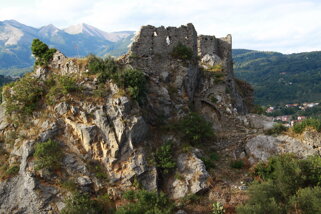
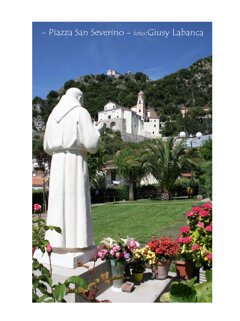
Strolling through the historic center, one is literally captivated by the typical medieval features revealed, starting with the ruins of Ruggero Castle, built on the Armo rock in the Cafaro neighborhood, the oldest in the town. Other historical traces can be found near the old town, which has preserved signs of its ancient origins in the houses clinging to the hillside, in the beauty of the noble palaces, in the characteristic narrow streets and intricate alleys, which in turn wind their way through arches, porticoes, and harmonious architectural motifs. The presence of sacred architecture, distributed between the Upper and Lower districts, is noteworthy. Lauria is the birthplace of Blessed Domenico Lentini, patron saint of the city, beatified by Pope John Paul II, who called him "a true example of life for all humanity." Every neighborhood, every alleyway preserves, in its recesses, a chapel, a shrine, a votive corner. The mother churches of the two districts are of notable workmanship: the diocesan sanctuary of Blessed Domenico Lentini and San Giacomo Maggiore Apostolo. There is no certain information about the founding of the two churches, Much of the original documentation was destroyed in the 1806 fire caused by Napoleon's troops. Currently, the Diocesan Shrine of Blessed Domenico Lentini, after various destructions and renovations, has a longitudinal Latin cross plan, three limestone portals from 1894 on the main façade, and an imposing bell tower composed of two elements. The building's style is eclectic, but the most notable stylistic influence is Baroque. The interior has three naves, with a wide transept and a deep rectangular apse. The church also boasts the mortal remains of Blessed Domenico Lentini. Originally, the Parish Church of San Giacomo was not dedicated to the Apostle, but likely to San Matteo, and only around 1500 did San Giacomo become the city's protector through the intervention of a Spanish countess (wife of a Sanseverino). The church currently has a Latin cross structure, with three naves, of which the central nave had a large semicircular apse which was demolished in the early 1900s to build the current provincial road. The bell tower dates back to the Baroque period, but the majolica covering of the spire reveals a Moorish style. Inside both churches, it is also possible to admire works of great artistic and religious value created by Pasquale Iannotta, Mariano Lanziani, and Emilio Larocca. The two convent complexes are also very interesting: the Capuchin Convent (17th century) and the Convent of the Immaculate Conception (16th century), the latter with a cloister of remarkable craftsmanship. There are numerous small churches and chapels of artistic interest, among which we cannot forget San Pasquale Baylon (16th century, with a precious majolica floor) and Santa Veneranda (among the oldest in the town): the latter two are located in the Cafaro district. To the left of the Castle, in a panoramic position overlooking the entire Noce Valley, stands the Sanctuary of the Assumption, a synthesis of Romanesque (the bell tower) and Baroque styles (the altar) and Renaissance (the portico); the 17th-century Neapolitan school paintings housed inside are also beautiful. The city's historic center is embellished with gems set in stone: scrolls and keystones that distinguish the portals of the city's houses and palaces. Some depict the coats of arms of the families who owned the properties, others depict masks or mythological animals (such as the Basilisk, symbol of Lauria) and were placed to protect the home. Of singular beauty is the large mask that can be seen on Via Cairoli in front of Palazzo Marangoni, a building dating back to 1585.
Nestled in one of the most picturesque landscapes of the Southern Apennines, between the Pollino National Park and the Appennino Lucano National Park, the Lauria area offers visitors highly evocative environmental settings, among the most beautiful in the entire Basilicata region, many of which are recognized as SCI (Sites of Community Interest) and included in the Natura 2000 Network.
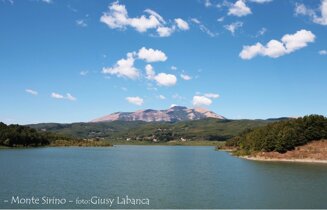
Sirino: a large limestone massif that represents a major water reserve, from which four major rivers (Sinni, Noce, Calore, and Maglie) originate, and which preserves some of the southernmost glacial cirques in Europe. From the highest peak, known as Monte Papa (2005 meters), snow-capped for much of the year and a destination for hikers and mountain enthusiasts, you can enjoy breathtaking views in any season. Admire breathtaking scenery and, on clear days, even the Aeolian Islands and Mount Etna. Mount Sirino offers opportunities for both winter and summer sports, including hiking, horseback riding, skiing, snow trekking, short walks, and cycling. During the spring and summer months, you can also use the recreational area.
Monte La Spina: a bare limestone spire (hence the name "Spina") characterized by the rare and prized Bosnian pine. Monte La Spina is an important reserve for the bioavailability of its flora and fauna. In autumn, the slopes are painted a thousand colors, in spring, you can witness magnificent blooms, and among the mammals, you can spot the Apennine wolf.
Rotonda Lake: a treasure trove of pristine nature waiting to be explored. The body of water, fed by rainfall on the slopes of Monte La Spina and Serra Rotonda, experiences significant fluctuations throughout the year, so much so that the lake can freeze in winter and dry up completely in summer. It is a place that exudes peace and tranquility, "a lake that doesn't exist," characterized by the presence of black pines and numerous bird species during migration, among the most notable specimens, the rare and elusive black stork has been observed.
Bosco Canicella: a large beech forest that extends along the slopes of Mount Sirino, connecting the two national parks of Pollino and Appenino Lucano. Above all, it is a must-see for mushroom lovers, as countless mushrooms grow in these parts. The forest is connected by trails to nearby towns offering a wide range of winter and summer ecotourism activities. During the spring and summer months, a picnic area is available.
The Lauria area offers a variety of outdoor activities within easy reach of the city center.
Lucana Cycle Route: A section of the "Magna Grecia Cycle Route," one of ten national tourist cycle routes, it extends for approximately 35.5 km, starting in Lagonegro and descending southeast, crossing the Lauria area and ending at the Rotonda-Viggianello station. The greenway runs almost entirely along the former Lagonegro-Spezzano Albanese railway and passes through a landscape of undeniable natural and cultural value, with small mountain villages rich in historical and archaeological sites.
Falesia Fabio Limongi: A climbing route with 20 routes where you can challenge yourself and put yourself to the test, offering one of the most adrenaline-filled experiences in the area.
EVENTS AND FLAVORS
LITTLE WAY OF SANTIAGO
BEATO DOMENICO LENTINI
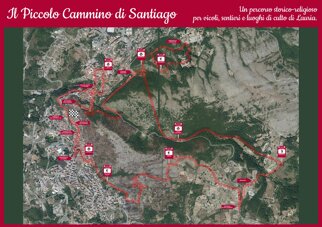
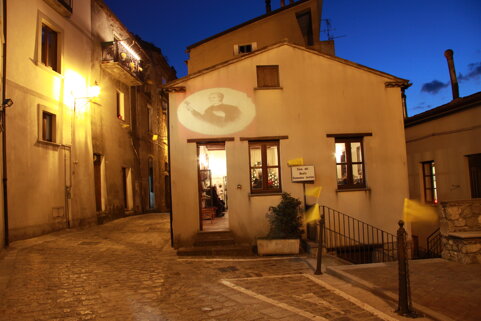
This historical-religious itinerary winds through the oldest and most characteristic alleys and paths of Lauria. Each year, it attracts an increasing number of pilgrims and trekking enthusiasts, including those from neighboring towns and regions. Its growth and media coverage have sparked interest among distinguished scholars and university professors. The route is approximately 13 km long, with elevations ranging from 380 to 687 meters above sea level. It presents no difficulty and is therefore suitable for everyone. It begins in Piazza San Giacomo and continues along the route, marked by appropriate signs. As with the Spanish Way, marked by its characteristic yellow arrow, it will be possible to visit churches, chapels, and monuments, cross the former Calabria-Lucania railway, now redeveloped and converted into a cycle path, and enjoy the beauty of the landscape of breathtaking views and pristine nature. Specifically, you will encounter the Chapel of St. Gaetano and St. John the Baptist, the Piazzetta dell'Ammiraglio, the War Memorial, the Monument to St. Joseph of Copertino, the Church of St. Maria dei Suffragi, the Chapel of St. Veneranda, the remains of the Church of Santa Maria della Sanità, the Edicule of the Madonna del Carmine, the Chapels of St. Elias (which also offers a beautiful view) and St. Joseph, the Iron Cross (our Cruz de Fer), the Chapel of the Divine Shepherdess, the Chapel of St. Ferdinand, the Mother Church of St. Nicholas of Bari, now the Diocesan Shrine of Blessed Domenico Lentini, the House of Blessed Domenico Lentini, the Chapel of St. Pasquale, Ruggero Castle, the Shrine of the Madonna Assunta, the Chapel of St. Veneranda, the Town Hall, and then conclude at the Mother Church of St. James the Greater Apostle.
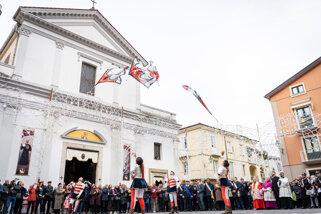
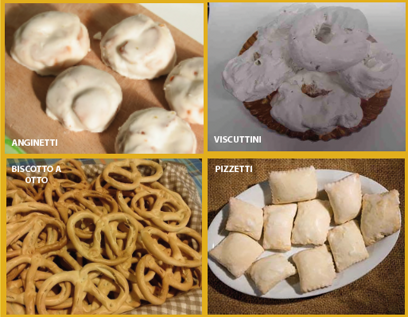
Lauria is deeply rooted in its religious traditions. Among the most important celebrations are the feast of Blessed Domenico Lentini, patron saint of Lauria, celebrated on February 25th, and the celebrations in honor of Saint Nicholas (May 9th), Saint James the Greater Apostle (July 25th), and the Madonna del Carmine (first Sunday in August). Numerous cultural, sporting, and volunteer initiatives enrich the city's social life. Of particular note are: the Mediterranean Award, an event that combines culture and entertainment to celebrate the beauty of this land and give voice to those who work tirelessly to enhance the entire region; the Dawn Concert, an event that blends the energy of light and the evocative power of music in the evocative location of the Sanctuary of the Madonna Assunta, from which you can enjoy an incredible view; the Palio del gusto, a real jovial competition for the tastiest dish in which the districts of Lauria challenge each other, surrounded by a gastronomic route based on typical products, which winds between the two main squares of the lower district and the ancient shops on Corso Cairoli; Vini a Lauria, an initiative that aims to showcase the region's excellent wines and promote the culture of "good drinking" by tasting fine wines from Lucanian wineries in the squares of the Rione Superiore, filled with evocative projections and themed displays; and MalErbaFest, a music-focused festival that showcases young, emerging local musicians against the picturesque backdrop of the Bosco Canicella. The local cuisine is equally rich. A rustic cuisine that will delight all palates, dominated by the crispiness of homemade pasta, the aroma of grilled or oven-roasted meat, local cheeses, cured meats, and desserts. Private enterprise has preserved the tradition of local products, producing exquisite cured meats such as the renowned and flavorful soppressata, homemade sausages, ricotta, and fresh and aged cheeses, as well as honey, wild strawberries, mushrooms, chestnuts, olive oil, and wine. Other local products include homemade wheat bread, the famous "pizzatuli," "sanguinaccio," "piccidatu," "mustaccioli," "zeppole," "crespelle," and the typical dried fruit. A variety of first courses include "maccaruni filati" (fusilli), "lagane e fasuli" (tagliatelle and beans), and "rascatiddi" (gnocchi). Among the main courses, try "gliummariddi" (offal rolls), country tripe, and pork rind and bean soup. Some of the most delicious biscuits are "pizzetti" and "viscuttini," covered with a soft layer of "naspro" (a type of pastry made with sugar and egg white), or "anginetti", Donut-shaped, first cooked in water and then baked to make them crispy, then covered with a sugar and lemon glaze; according to tradition, these are the typical biscuits for brides. Also included among the typical products are the famous eight-shaped taralli, aptly called viscuttu a' otto, and gassosa, a carbonated soft drink produced locally since 1906.
Nearly two centuries after his death, Lauria continues to display a true phenomenon of clear and profound popular devotion, sincere and unimaginative, restrained yet heartfelt, toward the figure of an exemplary priest who intensely lived all dimensions of his priestly identity: Domenico Lentini, proclaimed Blessed by John Paul II on October 12, 1997. The historical context in which he lived and worked saw him committed to the human and social advancement of his people. At a time when there were no public schools in Lauria, his humble little home became a training ground for the cultural and moral education of young people. A man of synthesis, with an undivided heart and a strong inner balance, he knew how to combine fidelity to God and to man in a period marked by In Europe, the Enlightenment and French Revolutionary ferment, and the rise and fall of Napoleon Bonaparte, events that had a profound impact on the Kingdom of the Two Sicilies and thus also on Lucania, then under the rule of the Bourbon dynasty. These events saw Lentini engaged in a major peacemaking effort between monarchists and republicans. Thanks to his diverse commitment to religion, social life, and education, and his clear human and Christian testimony, Lentini profoundly influenced the history, culture, customs, and life of the City of Lauria, which considers him one of its greatest sons. On the occasion of the 25th anniversary of his beatification, October 12, 2022, the Lentinian Jubilee Year was proclaimed. Furthermore, on the same date, the Church of San Nicola di Bari was elevated to the status of "Diocesan Shrine of Blessed Domenico Lentini."
PAT
Traditional Italian agri-food products (PAT) represent a unique cultural and gastronomic heritage for Italy. Recognized for their authenticity and deep connection to the territory and local traditions, they are promoted by the Ministry of Agricultural, Food and Forestry Policies (MIPAAF) through an annually updated list to promote their awareness both nationally and internationally. PAT recognition protects products "obtained through time-tested processing, preservation, and aging methods, consistent throughout the affected territory, according to traditional rules, for a period of no less than twenty-five years." Lauria boasts four traditional agri-food products: Anginetto, characterized by a soft texture and delicate flavor; Viscuttu a' otto, crunchy, perfect with a glass of country wine or local soda; the Goat, known for its particular shape and unique flavor, and the Viscuttino, a simple but delicious biscuit, prepared with local ingredients and according to recipes passed down from generation to generation. These products are a perfect example of how culinary traditions can be preserved and enhanced, helping to keep a community's culture and identity alive.
MAPPEDITALIA SOCIAL
Mappeditalia.it © Tutti i diritti riservati