Mappeditalia.it © Tutti i diritti riservati


HISTORICAL INFORMATION
THE SAN GIULIANO NATURE RESERVE
LE COSTE FOREST
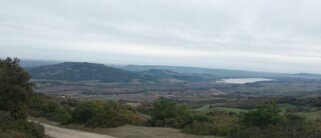
The San Giuliano Nature Reserve is a protected area of considerable ecological and historical importance located in Basilicata, a few kilometers from Matera, and extends across the municipalities of Grottole and Miglionico. The heart of the reserve is the artificial lake of the same name, created in the 1950s by damming the Bradano River. This vast wetland is recognized as a Site of Community Importance (SCI), a Special Protection Area (SPA), and is included in the list of wetlands of international importance (RAMSAR site). The wetland habitat, together with the surrounding areas, offers refuge to a rich variety of flora and fauna, serving as a key stopover point for migratory birds. The reserve has been managed by WWF Italy in collaboration with the Province of Matera since 1989. The vegetation around the lake is diverse, alternating between strips of conifers and eucalyptus trees, planted after the creation of the reservoir, and patches of native Mediterranean scrub. Plant species include mastic, wild pear, paliurus, juniper, phillyrea, hawthorn, and downy oak. The reserve is a paradise for birdwatchers, thanks to the presence of numerous species of birds, both resident and migratory. Visitors can observe egrets, moorhens, and birds of prey such as the Egyptian vulture, red kite, and marsh harrier. The area is also home to mammals such as the otter (the symbol of the reserve) and particularly important reptiles such as the hermanni tortoise (Testudo hermanni). The construction of the dam has altered the river ecosystem, creating a lake environment that supports various fish species. In addition to its naturalistic value, the area is also of significant historical and archaeological importance. Numerous prehistoric and early medieval artifacts, including interesting grave goods, have been discovered on the lake shores. The most famous discovery is the fossil skeleton of a whale, nicknamed "Giuliana," dating back to the Pleistocene, which is exhibited at the National Museum of Matera. The reserve offers hiking and biking trails along the dam and around the lake. Equipped picnic areas are available, as well as a visitor center that organizes educational activities and guided tours by reservation.
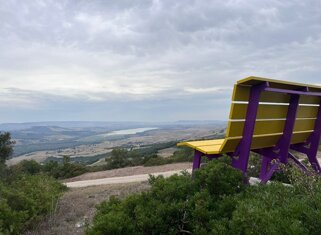
Le Coste Forest is part of the San Giuliano Natural Oasis, located a few kilometers from the town. It represents the largest green lung, a natural extension of the oasis itself. Also of significant environmental importance are the Sant'Antonio Abate Forest and Plateau, which abound with Mediterranean scrub and rare flora and fauna. Here, you'll find a well-equipped green area where you can fully immerse yourself in nature and be captivated by its colors and sounds. A Big Bench No. 262 (Giant Bench) has been positioned here, allowing you to enjoy a breathtaking view amidst a green area well-equipped with picnic huts equipped with wooden benches and tables, stone barbecues, lighting, and children's playground equipment. The area is equipped with every comfort, including a large parking lot, a swimming pool, and a restaurant. An enchanting place where you can fully immerse yourself in nature and be pampered by its sounds and scents, thanks to a nature trail accessible on foot, horseback, or by bicycle. In a peripheral area of Grottole, near the road leading to the valley floor, in the area now known as Via Fontana dei Fichi, lies the Fontana dei Fichi: a historic rural fountain whose importance is primarily linked to its function as a water supply and its symbolic value to the local community, rather than to complex architectural details or elaborate decorations. It is a traditional fountain, likely dating back several centuries, which in the past represented a vital point for the village, located along the path connecting the station to the town center. It was used to supply drinking water, drawn from a spring. It is made of local stone, with blocks likely irregular or roughly hewn, giving it a rustic appearance that blends in with the surrounding environment. The name "dei Fichi" (fig trees) suggests the historical presence of fig trees in the immediate vicinity, a common feature in the rural Mediterranean landscape. It is flanked by another historic fountain, the nearby Cupone Fountain, both considered part of the village's heritage. The Fontana dei Fichi (fig fountain) holds great ethno-anthropological significance, a symbol of ancient peasant life and the importance of spring water for the survival of the Grottole community.
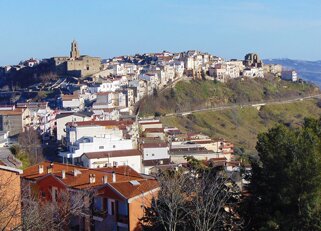
Grottole, located on a rounded plateau over 400 meters above sea level between the Basento and Bradano rivers, is partially included in the San Giuliano Regional Reserve. Nearby, along the slope overlooking the Bradano Valley, lies the beautiful "delle Coste" forest. Its name derives from the Latin "criptula" and reveals the prehistoric origins of this Lucanian town, which began to form within small caves, some still visible and others renovated and used as workshops for local artisanal products. The area also boasts interesting Greek and Roman settlements; Grottole was also part of the VII Metapontina Region, an area of Magna Graecia known for its fertility and prosperity, located between the Bradano and Basento rivers, colonized by the Greeks between the 13th and 12th centuries BC. In Roman times, Grottole was a small garrison village and also a small station along the Appian Way. During this period, the community became a Municipium. When the Lombards divided Italy into 36 duchies, the fiefdom of Grottole was incorporated into the Duchy of Salerno, ruled by Siconolfo, Prince of Salerno, who built the original nucleus of the Feudal Castle on the hill known as Motta. Over the centuries and until 1874, various families and lordships fought over the fiefdom: from the Orsini-Del Balzo family to the Zurlo-Pisciscelli family, from the Sancez De Luna D'Aragona family to the Caracciolo family of Melissano, from the Spinelli family of San Giorgio to the Sanseverino family of Bisignano.
TOURIST ROUTE - THIRD PART
TOURIST ROUTE - FIRST PART
TOURIST ROUTE - SECOND PART
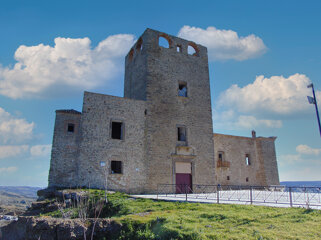
The Grottole tourist itinerary offers a deep immersion in the history and authentic atmosphere of a Lucanian village, combining urban exploration with the beauty of the surrounding landscape. The ideal starting point is the historic center, a labyrinth of alleys, stairways, and well-kept squares that recount centuries of history. Strolling, you'll notice the typical stone houses and, for those interested in local crafts, the characteristic "grotticelle" (little caves) once used by local artisans. In the lower part of town, the Church of San Rocco is a place of worship of considerable historical and artistic interest, dating back to the 15th century. Initially dedicated to Santa Maria la Grotta, the church was reconsecrated to San Rocco, the town's patron saint, in 1655 after a plague. A pre-existing cave is still visible behind the main altar. The gabled façade features a pointed-arch portal, while the interior is divided into three naves by columns. Among the artistic artifacts are a 17th-century pipe organ on the balcony above the entrance and a carved wooden pulpit from the same period. The left aisle houses the altar and the statue of Saint Rocco from 1755. Other altars in the naves are dedicated to the Madonna Annunziata, the Glorification of Mary, the Virgin of the Assumption, and the Holy Trinity, with artworks including bas-reliefs and a 17th-century canvas. Climbing to the top of one of the town's two hills, you reach Sichinulfo Castle (dating back to the 9th century), also known as the Feudal Castle. Its imposing façade dominates the village, offering picturesque views from various angles. Built primarily with local limestone, the castle features architecture typical of medieval fortresses. Its massive walls were originally defended by battlements and arrow slits, characteristic elements of military architecture of the time. Its elevated position provided a strategic observation point for the defense of the surrounding territory. In the early 19th century, the structure consisted of 13 rooms on the upper floors and 6 on the lower floors, as well as a stable and a cellar. Inside, a large stone fireplace, located in a room preceding the entrance to the main tower, is of considerable historical interest. This fireplace is surmounted by a large stucco shell containing a coat of arms, possibly belonging to the Sanseverino di Bisignano family, one of the families who owned the fiefdom. A distinctive feature is the colossal tower, whose window, opening onto the village, is at the heart of the local legend of Abufina: a tragic love story of a young woman who drowned in the Basento stream while hastening to reach her beloved, Selepino. Because of this event, her spirit is said to wander the castle, appearing at the tower's window on full moon nights in spring (April to June). Tradition attributes the beginning of construction in 851 to Sichinulfo, Lombard Duke and Prince of Salerno, for the purpose of defending the village. Over the centuries, the castle has undergone numerous architectural transformations and changes of ownership, reflecting the historical events of Basilicata, particularly in the 12th century. Its imposing exterior continues to be a landmark and attraction for visitors to the village of Grottole, offering a unique opportunity to immerse themselves in the town's medieval past. It was also used as a filming location for Giovanni Veronesi's 2018 film "The King's Musketeers." From the square in front, there is a breathtaking view of the surrounding valley and the iconic Ruined Church of Saints Luke and Julian.
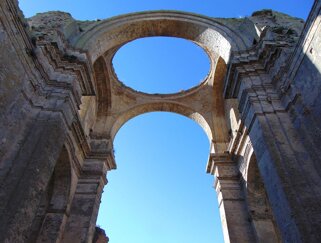
This church is undoubtedly Grottole's most evocative symbol. The imposing and mysterious remains of a church partially collapsed (or "ruined") due to ancient earthquakes dominate the cityscape. While it's not possible to visit the interior, its skeletal façade and atmosphere of decaying beauty are perfect for unique photographs and a reflection on the town's history. It is visible from various vantage points around the town, especially from the castle. Its most distinctive feature is the absence of a roof, which opens the interior to views of the sky and offers a unique atmosphere, especially at sunset or during the cultural events held there. The structure is notable for its size, approximately 39 meters high and 20 meters wide, and dominates the Basento Valley from above the historic center. The building's appearance is austere and monumental. Although it is difficult to assess the complete architecture due to the ruins, the remaining sections suggest a style blending Renaissance and Baroque elements, typical of the construction period, which began in the early 16th century (starting in 1509) on the foundations of smaller pre-existing churches, which were razed to make way for a larger, more representative building. The intention was to make it the town's new main parish church. However, the work was never fully completed. A series of earthquakes and landslides over the centuries undermined its stability, leading to a partial collapse in 1765. Following this event, the church was permanently abandoned and the parish title passed elsewhere. Since then, it has remained in its current state, a "fragile beauty" that bears witness to the region's seismic and social history. The Mother Church of Santa Maria Maggiore (or Collegiate Church of Santa Maria Maggiore) stands at the highest point of the town and is the town's main place of worship; it offers a panoramic view of the historic center and the surrounding landscape. The church's interior is divided into three naves. The architecture is characterized by elements that reflect different historical periods and renovations. The church's interior houses several notable works of art. Among these, the Destruction of the Rosaries stands out, a large canvas attributed to Carlo Sellitto and originally composed of 15 panels framing a statue. A painted stone statue of the Madonna and Child, dating back to the mid-16th century, is located in the left nave. Other works by Carlo Sellitto include a canvas depicting Saint Dominic in the Chair teaching the people. In the chapel of the Blessed Sacrament are two paintings, one by Nicola Malinconico (Madonna and Child between Saints John the Evangelist and Lucy) and another by an unknown artist. The nave is also enriched by a wooden statue of Saint Roch in Triumph and a crucifix. Adjacent to the Mother Church, the former Convent of the Preachers (or Dominicans) was built in the 16th century. Although no longer an active convent, it still retains much of its original structure, well-structured and organized to accommodate community life, including a cloister, a dining hall, cells for the friars, a library, and various service rooms. The entrance to the convent, located to the right of the Mother Church, still bears traces of the Dominican coat of arms, supported by two angels. Today, the former convent is mostly privately owned, however, a small portion continues to be used as a rectory. Despite the change in use, the building still retains many of its original structural elements, testifying to its long history. Near the town center, in the "Serre" area, on a small hill stands the Convent of the Capuchin Friars, dedicated to the Holy Trinity.
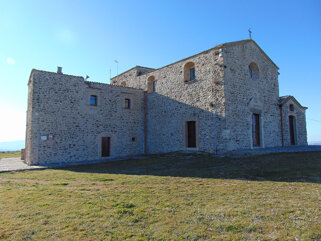
Construction of the convent began in 1601 at the initiative of the University and King Philip III. Work was delayed by the "Innocentian Inquiry" of 1652, which aimed to suppress small convents. The first stone was blessed a year later, in 1653. During its period of activity, the convent became an important cultural center for the region, housing a very rich library. In 1851, it contained 1,827 volumes. It has a rectangular plan, with a sober and compact structure. It included a basement with cellars, restrooms, and winemaking rooms. On the ground floor were the cloister, kitchen, refectory, church, and library. On the first floor were the friars' cells. After the suppression of religious orders, the convent served various purposes, including a heliotherapy colony during the Fascist era and a smallpox hospital in 1865 and 1949. Between Viale della Resistenza and Via Garibaldi is the Church of San Pietro (16th and 17th centuries). Also known locally as the Church of Purgatory, it recently underwent major restoration work, allowing it to reopen for worship in June 2025. The building's architecture reflects the late Renaissance and Baroque periods of its construction. The interior has undergone several renovations over the centuries, and recent restorations have helped preserve its structural and artistic integrity. Inside the church, several works and artifacts of artistic interest can be admired. At the center of the wall decorated with gilded stucco, near the high altar, is a valuable carved and painted wooden crucifix. Above the main portal is a bronze plaque depicting Our Lady of Mount Carmel. To the right of the entrance, an altar dedicated to Saint Anthony the Abbot houses a statue of the saint, donated in 1891 by the Danzi family. The sacred furnishings are completed by several statues, including those of Saint Lucy, Saint Peter the Apostle, Our Lady of Mount Carmel, and a Pietà. Approximately 13 km from the town center, on a plateau offering a beautiful view of the Matera hills, lies the Sanctuary of Saint Anthony the Abbot. The sanctuary is likely the oldest religious building in the area; 19th-century historiography suggests it was built after 1371 at the behest of Queen Joanna I. After the church was built, a small hospital was annexed to care for the sick, particularly those suffering from the so-called "St. Anthony's Fire" (herpes zoster). The sanctuary is located in an isolated and panoramic location, accessible via a partially unpaved and uphill road, which preserves its atmosphere of peace and contemplation. The church has a single longitudinal nave. The exterior walls have a rustic appearance, gray and occasionally covered in moss, testifying to its antiquity. Inside, an ancient wooden statue of the miracle-working saint, dating back to the early 15th century and restored in 2012, is preserved. The sanctuary is an emblematic place of faith and popular tradition for several communities in the Matera area. The liturgical feast day falls on January 17th (the day Carnival begins), but in Grottole it is traditionally celebrated on the Monday and Tuesday following Pentecost. Devotion to the saint, protector of animals, is manifested through ancient rites, such as walking three times around the church before entering. Numerous votive offerings kept in the sanctuary testify to the graces received over the years.
Meals, especially during the holidays, are moments of social gathering. Hospitality is sacred, and visitors are welcomed with the finest local produce. Rural tradition teaches us not to waste anything, as demonstrated by the use of stale bread in many recipes or the use of meats considered "poor" in cured meats and stews. During the holidays, special desserts are prepared, such as calzoncelli (stuffed pastries) at Christmas or stozze (similar to cantucci). Grottole's cuisine is an authentic experience that tells the story of a region proud of its roots and authentic flavors. Grottole is recognized as the "City of Honey" thanks to its strong beekeeping tradition, the quality of local produce, and initiatives that promote its cultural and tourism value. The Municipality of Grottole has formally joined the Italian National Association "Le Città del Miele," a network of municipalities committed to protecting and promoting Italian honey and beekeeping. This membership demonstrates the central role honey plays in the town's economy and identity. Beekeeping is rooted in an ideal environmental and agricultural context, which allows for the production of high-quality organic honeys, unique in other contexts. Local honeys are prized for their unique characteristics, which reflect the rich biodiversity of Basilicata's flora. Grottole regularly hosts events dedicated to the sector, such as the "Grandi Mieli di Basilicata" Award Ceremony, which celebrates regional beekeeping excellence and attracts the attention of experts and enthusiasts. Visitors can participate in guided apiary tours, educational workshops, and organic honey tastings to discover the secrets of beekeeping and the importance of bees to the ecosystem. In short, Grottole is not just a place of excellent production, but a true cultural center that promotes knowledge of beekeeping, offering immersive experiences that combine sustainable tourism, urban regeneration, and the valorization of local resources.
The streets fill with lights, stalls, and people, creating a vibrant atmosphere that lasts late into the night. The Grottole festival is not only a religious event, but a cultural experience that engages the entire community and visitors. The Feast of Our Lady of the Assumption, celebrated on August 15th, is an integral part of the town's solemn midsummer celebrations, which culminate the following day with the Feast of Saint Rocco. The celebration combines deep religious devotion to Mary with ancient local secular traditions. On August 15th, the Catholic Church celebrates the dogma of the Assumption of Mary into Heaven. In Grottole, this solemnity is celebrated with great participation. The day is dedicated to masses and religious services, held primarily in the Mother Church. The faithful devoutly participate in this moment of faith, which marks the culmination of the year's Marian celebrations. The statue of Our Lady of the Assumption is carried in procession through the streets of the historic center, finally arriving at the Church of Saint Rocco, where it remains on display for the faithful's prayers. This symbolic gesture physically unites the two main celebrations of August in Grottole. The Feast of Our Lady of the Assumption in Grottole is therefore a moment of strong local identity, uniting Marian faith with the rich folk tradition of Lucania. The Feast of Saint Anthony the Abbot is a deeply rooted celebration, characterized by a unique feature: the main festival is held in May/June, on the Monday and Tuesday following Pentecost, due to more favorable weather conditions compared to the liturgical date of January 17th. The devotion of the people of Grottole is fully manifested in late spring. The festivities begin on the Altoianni hill, where the ancient sanctuary dedicated to the Saint is located. The festival is marked by religious and community moments. The faithful participate in a heartfelt pilgrimage and procession to the sanctuary. The culminating moment is the return of the effigy of the Saint from the hill to the town center. The statue, accompanied by a marching band and praying faithful, passes through the streets and narrow alleys of the town, as if blessing every corner. The festival is renowned for the large and heartfelt participation of residents, who for the occasion pour into the streets, leaving the town almost "deserted" as they follow the procession. The Fiera di San Luca in Grottole, held annually on October 13th and 14th, is one of the Lucanian village's most deeply rooted traditions. Dedicated to Saint Luke the Evangelist, the fair has ancient origins dating back to the time of the Kingdom of Naples. In the past, it was a highly significant event, attracting merchants from various regions of Italy, as well as from abroad, including Greece, Turkey, and Yugoslavia. Originally, it lasted for 15 days. The traditions associated with the fair included a strong connection to pastoral culture, with shepherds arriving with their produce and livestock, accompanied by traditional music played on accordions, flutes, tambourines, and mandolas. The modern event lasts two days, and the town streets are filled with stalls offering typical local products and crafts. The atmosphere is enlivened by performances by street artists, including jugglers, fakirs, and magicians.
CRAFTSMANSHIP
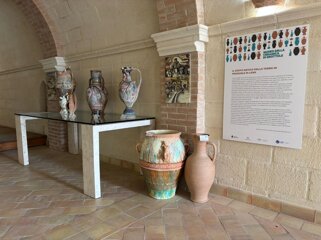
Grottole's craftsmanship is primarily characterized by a deep and historic tradition of ceramics and terracotta, rooted in a millennia-old past. This art is passed down from generation to generation, using ancient techniques that have survived to the present day. The key ingredient is local clay, a local resource that is shaped to create unique artifacts. The work is often done on a lathe, a technique that requires great skill and experience. The objects are then fired in the village's ancient kilns, now electric ovens, preserved as part of the town's historical heritage. In the past, everyday objects were produced, such as vases, amphorae, oil measuring jugs, and various containers, which met the needs of daily life. Today, production includes both these traditional objects and contemporary design pieces. The artifacts are often characterized by glazes and decorations that reflect the colors and motifs of Lucanian culture. Craftsmanship is not simply the production of objects, but a living cultural experience; Workshops are promoted where visitors can try their hand at the wheel under the guidance of master craftsmen. The Ceramics Museum displays historical artifacts and artisanal works, offering a journey that connects the community's past and present. Annual events such as "A Spasso nell’Antica Arte della Ceramica di Grottole" celebrate and enhance this unique artisanal identity. In addition to ceramics, Grottole's crafts also include other, albeit less prevalent, techniques: carved wood and wickerwork. These activities help keep the village's cultural heritage alive, preserving ancient knowledge and offering artifacts that tell the story of the area.

RITES AND EVENTS
GASTRONOMY
Grottole's culinary traditions, deeply rooted in the rural and pastoral culture of Basilicata, celebrate simplicity, authenticity, and a connection to the land. Grottole cuisine emphasizes local, seasonal produce, creating hearty, flavorful dishes. The cuisine is based on a few essential ingredients, often locally sourced. The surrounding hills are renowned for their production of organic extra virgin olive oil, an essential base for every soffritto and condiment. Legumes and vegetables—fava beans, chickpeas, lentils, wild chicory, wild fennel, and lampascioni—are omnipresent, often combined in soups or main courses. Fresh, homemade pasta is the undisputed star of the first courses: cavatelli with Peperone Crusco and Mollica Fritta (fried breadcrumbs) is a dish that combines diverse textures and intense flavors; orecchiette with turnip greens is a classic, simple, and flavorful first course; Crapiata: a rich soup made with various legumes and grains (fava beans, chickpeas, lentils, wheat, and grass peas). The local meat and dairy products are of the highest quality. The delicious free-range lamb is cooked with local herbs, such as wild fennel, which lends a unique aroma. Pignata is a traditional mutton stew, slowly cooked in a terracotta pot with potatoes, onions, celery, and other herbs, sometimes enriched with salami and soppressata. Pezzente della Montagna Materana is a traditional cured meat (a Slow Food Presidium) with a bold, intense flavor, made with local pork. It is eaten as an appetizer or used to flavor sauces and soups. Caciocavallo Podolico is a semi-hard, aged cheese made with the milk of Podolica cows, with an aromatic, buttery flavor, often served in mixed platters. Grottole's culinary traditions are tied to seasonal cycles and holidays.
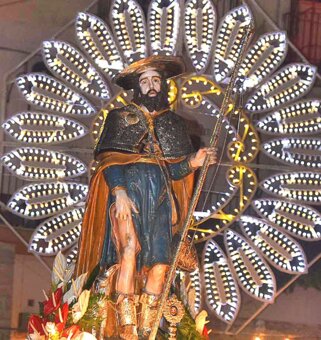
The Patronal Festival of San Rocco in Grottole is the most anticipated event of the year for the local community and represents a moment of profound devotion and tradition. The celebrations combine centuries-old religious rites with civic, cultural, and entertainment events, generally taking place from August 14th to 17th, culminating on August 16th. The festival is dedicated to San Rocco, invoked since the Middle Ages as a protector from the plague, and to the Blessed Virgin Mary of the Assumption. For the people of Grottole, it is an opportunity to reunite, often with the return of emigrants, and to strengthen their ties to their hometown and their roots. The central moment of the festival is the solemn procession that takes place on August 16th. The statue of San Rocco, decorated and carried through the town streets, is accompanied by a large turnout of faithful, civil and military authorities, and often by bands that mark the passage with solemn marches. During the procession, the symbolic ritual of handing over the keys of the city to the Patron Saint takes place, a gesture that emphasizes the community's protection. A distinctive and historic element of the festival is the presence of the "cassarmonie," a decorated wooden structure that serves as the central stage for musical events and band concerts, becoming the beating heart of civic events in Piazza Aldo Moro. In addition to traditional band concerts, the festival often includes musical performances by local or national artists and culminates with a massive fireworks display that lights up the sky above the castle, marking the festive conclusion of the celebrations. The atmosphere is charged with devotion, joy, and a sense of community.
MAPPEDITALIA SOCIAL
Mappeditalia.it © Tutti i diritti riservati